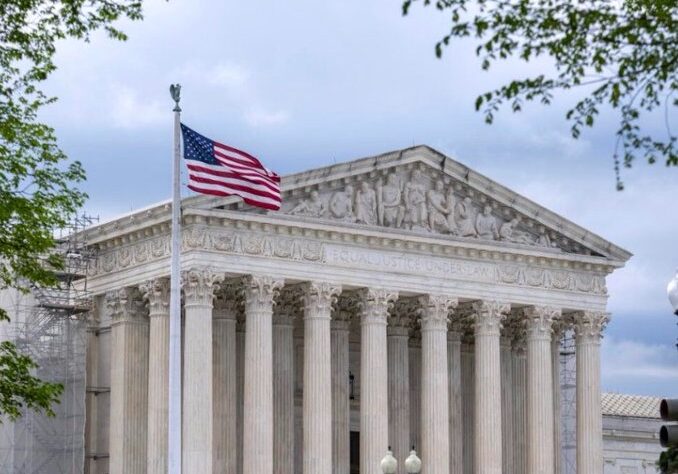
The Supreme Court on Tuesday refused to bring back a Biden-era rule that let immigration judges set deportation cases aside, sometimes for years.
The order was brief and unsigned, with no noted dissents, SCOTUSblog reported. It leaves in place a Texas victory that wiped the rule off the books, and it hands the Trump administration a clean win on immigration enforcement one week before Election Day.
The rule
In 2024, the Justice Department’s immigration court system adopted a rule allowing judges to use “administrative closure.” That let a judge pause a removal case, for example so a migrant could pursue asylum or another benefit through a separate agency.
The practice was not small. According to the Trump administration, removal cases closed this way rose from nearly 172,000 in 2013 to more than 268,000 in 2017, Hot Air reported. During President Trump’s first term, his attorney general ruled that judges had no authority to shelve cases indefinitely. Biden’s team brought the practice back.
In April 2025, the acting head of the immigration court agency said the department “could not — and will not — defend” the 2024 rule.
Texas steps in
In June, Texas Attorney General Ken Paxton sued, arguing the rule worked as de facto amnesty. Texas also argued that federal law requires immigration judges to decide whether a person is removable, not park the case.
The Justice Department agreed. The same day the suit was filed, both sides asked Chief U.S. District Judge Reed O’Connor to enter judgment for Texas, strike down the rule and bar the agency from writing a copy. He did.
The cities’ last stand
That should have been the end of it. Instead, Baltimore, New Haven and Columbus, along with the immigrant legal services group Centro Legal de la Raza, tried to jump into the case to defend the rule themselves.
Their argument for standing was remarkable. The cities claimed that ending the rule would cost them money because their taxpayers would likely be deported. Judge O’Connor rejected that and ruled they had no standing. The Fifth Circuit refused to block the judgment. Then the Supreme Court said no.
Solicitor General D. John Sauer told the justices the challengers were using a procedural fight to launch a broader attack on the merits. The Court left the agreement in place.
The challengers’ lawyer, Joshua Salzman of the left-leaning legal group Democracy Forward, called the Texas deal the product of “egregious collusion.” He argued it could let agencies walk away from rules they dislike.
The bottom line
Read the cities’ argument again. Three city governments went to federal court and said, in effect, that they needed deportable migrants to stay because those migrants pay local taxes. That is the sanctuary mindset with the mask off: the law is an obstacle, and the people who are supposed to be removed are a revenue stream.
Administrative closure was never mercy. It was a pause button that turned “removable” into “someday, maybe.” A case that never ends is an order that never gets enforced.
Now a Republican attorney general, a President who means what he says on the border and the nation’s highest court have closed that door. Biden’s backlog machine stays dead, and the blue cities that tried to save it walked away with nothing.